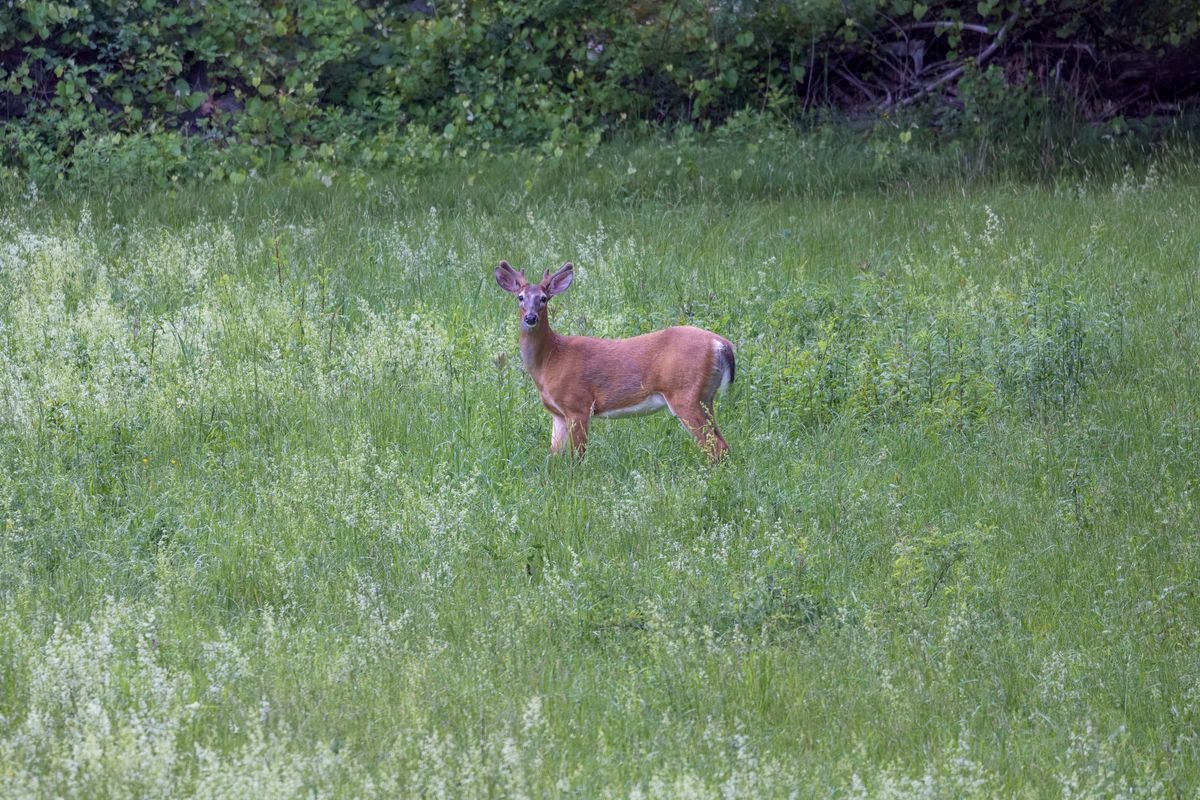
The white-tailed deer is one of the best-known wild animals in North America. It is found from southern Canada through the United States and into parts of Central and South America. Its name comes from the white underside of its tail, which it raises like a flag when it senses danger.
In this guide you will learn how white-tailed deer live, what they eat and how they fit into the forest ecosystem.
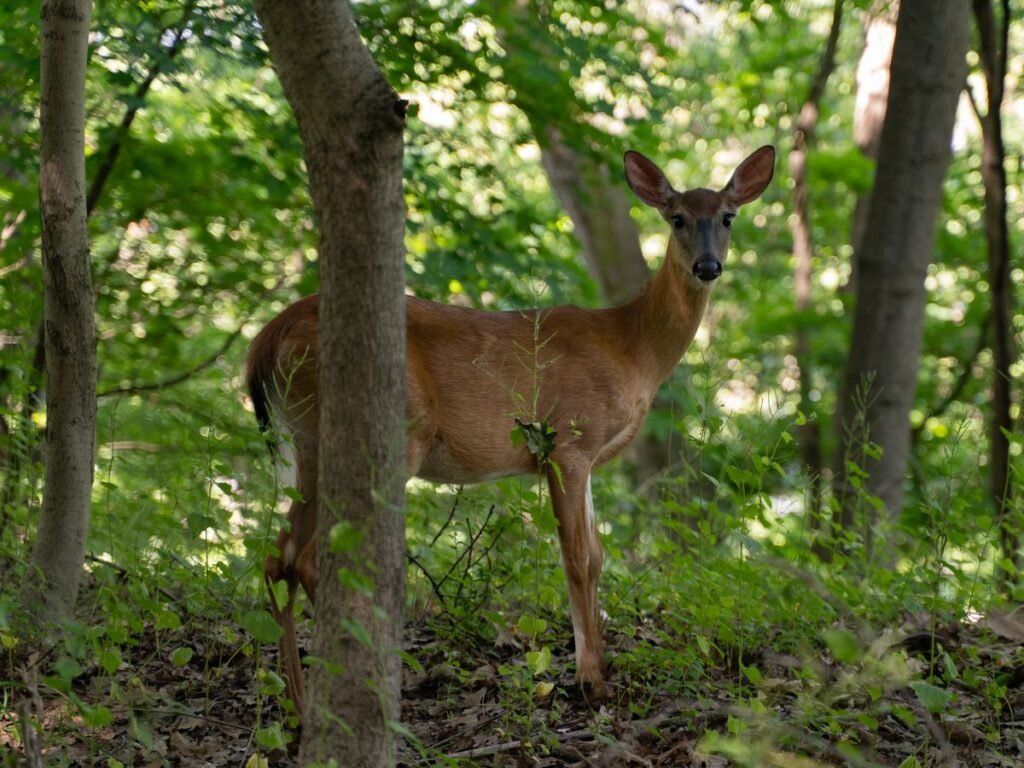
Appearance
White-tailed deer have a reddish-brown coat in summer that turns greyish-brown in winter. They have white fur on the throat, belly and under the tail. Males, called bucks, grow antlers each year, which they shed in late winter. Females, called does, do not usually have antlers.
Size varies a lot across their range. Deer in northern areas tend to be larger than those in warmer southern regions.
Habitat
White-tailed deer are very adaptable. They live in forests, farmland, swamps, prairies and even suburban neighbourhoods. They especially like edge habitat, where woodland meets open fields, because it offers both food and cover.
Diet
These deer are herbivores and browse on a wide variety of plants. Their diet changes through the year:
- Spring and summer: green leaves, grasses, herbs and tender shoots
- Autumn: acorns, nuts, fruits and farm crops
- Winter: twigs, buds and bark from woody plants
Behaviour
White-tailed deer are most active at dawn and dusk. They have excellent hearing and a strong sense of smell, which help them detect predators. When alarmed, a deer may stamp its foot, snort and run off with its white tail raised, warning other deer nearby.
Does usually give birth in late spring or early summer. Fawns are born with white spots that help them blend into dappled light on the forest floor. The mother often leaves the fawn hidden while she feeds nearby, returning to nurse it.
The Rut
In autumn, bucks enter the breeding season, known as the rut. They rub their antlers on trees, scrape the ground and may spar with other males. This is also the time when deer are most active near roads, so drivers should take extra care.
Role in the Ecosystem
Deer are an important food source for predators such as wolves, cougars and coyotes, and for scavengers. However, in many areas deer numbers have grown very high, partly because large predators have declined. Too many deer can eat young trees and wildflowers faster than they can regrow, changing the forest over time.
Watching Deer Safely
- Watch from a distance and use binoculars
- Never feed wild deer
- Leave fawns alone; the mother is usually close by
- Drive carefully at dawn and dusk, especially in autumn
Final Thoughts
The white-tailed deer is a true survivor, able to live almost anywhere from deep forest to the edge of town. Understanding its habits helps us enjoy it safely and manage its numbers wisely, keeping both deer and forests healthy.