
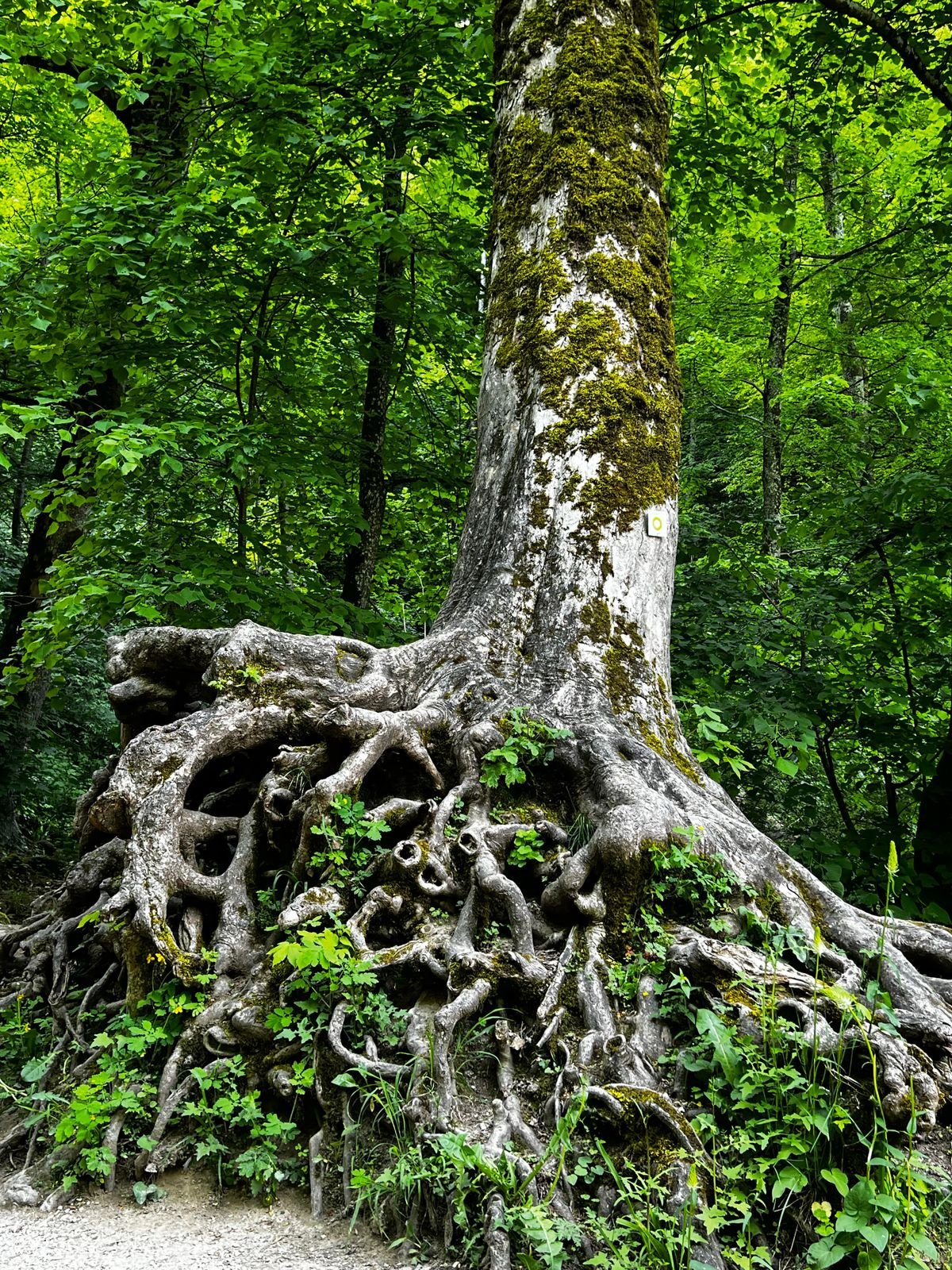
When we look at a tree, we see the trunk, branches and leaves. But a huge part of every tree is hidden underground. Roots anchor the tree, gather water and nutrients and connect it to a living world beneath our feet.
Here is a simple look at how tree roots work and why they are so important.
What Roots Do
Tree roots have several main jobs:
- Anchoring: they hold the tree upright against wind and storms
- Absorbing water: fine roots take up water from the soil
- Gathering nutrients: roots collect minerals the tree needs to grow
- Storing energy: many trees store food reserves in their roots for spring growth
How Deep Do Roots Go?
Many people imagine roots as a mirror image of the branches, reaching deep into the ground. In fact, most tree roots grow in the top layers of soil, where water, air and nutrients are easiest to reach. The root system often spreads much wider than the tree’s crown.
Some species do send roots deep down, especially in dry areas, but for most forest trees the action happens near the surface.
Fine Roots and Root Hairs
The thick roots near the trunk are mostly for support and transport. The real work of absorbing water happens in tiny fine roots and root hairs at the tips. These are short-lived and constantly replaced as the tree grows.
Partners Underground: Mycorrhizal Fungi
Most trees form a partnership with fungi called mycorrhizae. The fungi wrap around or grow into the roots and spread fine threads through the soil. They help the tree absorb water and nutrients such as phosphorus, and in return the tree gives the fungi sugars made through photosynthesis.
Scientists continue to study how these fungal networks connect plants and how much they share resources, and research in this area is still developing.
Roots and Soil Health
Roots help create healthy soil. As they grow, they open channels for air and water. When fine roots die, they add organic matter that feeds soil life. On slopes and riverbanks, root systems hold the soil together and reduce erosion.
Threats to Tree Roots
Because so many roots are close to the surface, they are easily damaged. Common threats include:
- Soil compaction from vehicles, machines or heavy foot traffic
- Digging and trenching near trees
- Paving over the root zone
- Flooding or long periods of drought
How to Protect Roots
- Keep vehicles and heavy loads away from the area under a tree’s crown
- Use a layer of mulch instead of bare soil or paving
- Water young trees during dry spells
- Ask an arborist before digging near large trees
Final Thoughts
Roots are the hidden half of every forest. They keep trees standing, feed them and help build the soil that supports all forest life. Protecting what lies beneath our feet is just as important as caring for what we see above ground.